
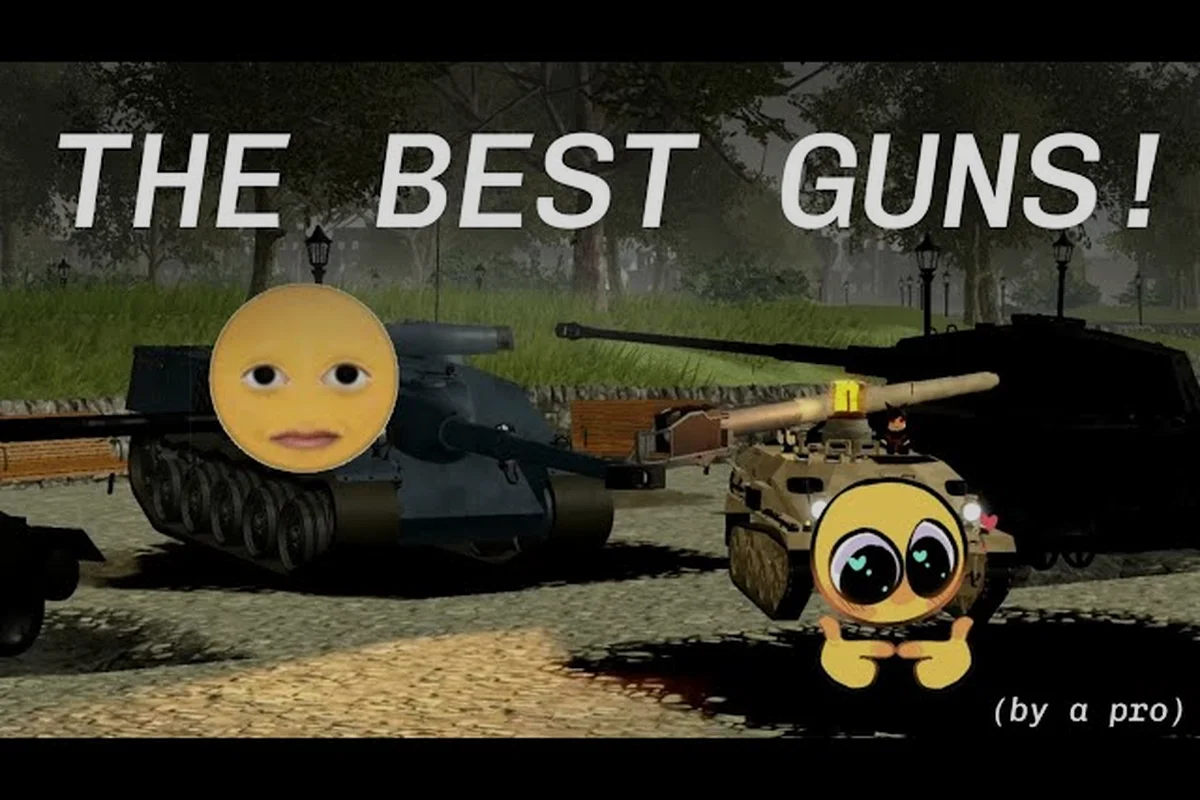
The cursed tank simulator speed module is the single most underrated upgrade in the game, because it transforms sluggish heavies into flanking machines and turns light tanks into hit-and-run nightmares. While most players dump their resources into cannons and armor first, mobility determines whether you actually get to use that firepower before getting circled by faster opponents. Understanding how speed modules interact with your hull weight, engine type, and track modules is the difference between dominating the battlefield and watching your tank get outmaneuvered every single match.
Speed modules in Cursed Tank Simulator aren't just about raw numbers — they change your entire engagement style. A well-tuned speed setup lets you reposition between shots, escape artillery fire, and control the pace of every fight. The game's module mixing system, described on the official Roblox page, lets you combine armor, engine, turret, cannon, and track modules freely, which means your speed choices ripple through your entire build. Whether you're grinding low tiers or pushing into tier 12 endgame content, the cursed tank simulator speed module deserves a permanent slot in your loadout strategy.
Speed Module Basics and How They Work
The cursed tank simulator speed module system operates on a simple principle: every tank has a base mobility profile determined by its hull, and modules modify that profile in three distinct ways — acceleration, top speed, and turn rate. Acceleration determines how quickly you reach your maximum velocity, top speed caps how fast you can travel on flat ground, and turn rate controls how quickly your hull rotates. These three stats work together, because a tank with high top speed but terrible acceleration will lose every short-distance chase, while a tank with excellent turn rate but low top speed gets kited by faster opponents.
The speed module itself comes in several variants that you unlock through the research tree, and each one shifts the balance between acceleration, top speed, and hull traverse in a different way. For example, the Mk. II variant boosts your forward thrust by roughly 15% but cuts your reverse speed to a crawl, which is a death sentence on open maps if you get caught in a crossfire. The best choice depends entirely on your tank class—a light scout like the Lynx benefits from raw top speed to cap points and flank, while a heavy brawler like the Rhino should prioritize traverse and acceleration over straight-line velocity to keep its front armor facing the enemy.
-
Light Engine Modules — Boost acceleration and turn rate significantly, but add minimal top speed. Perfect for light tanks that need to dodge incoming fire.
-
Heavy Engine Modules — Increase top speed substantially while sacrificing some acceleration. Ideal for medium tanks that want to reposition across the map.
-
Balanced Track Modules — Provide moderate boosts to all three mobility stats without major drawbacks. The safest pick for beginners learning the module system.
-
Experimental Overdrive Modules — High-risk, high-reward options that boost top speed dramatically while reducing hull durability. These are the cursed tank simulator speed module variants that create meme builds.
According to community testing, the acceleration stat matters more than top speed in most engagements, because battles in Cursed Tank Simulator happen at close to medium range where you're constantly stopping, turning, and re-engaging. Players who focus exclusively on top speed often find themselves overshooting their targets and getting caught in the open. The sweet spot for most builds is a 60/40 split between acceleration and top speed, though heavy tank players may want to lean further toward acceleration to compensate for their sluggish base stats.
How Speed Modules Interact With Hull Weight
Your hull weight is the single biggest factor in how effective any speed module will be. A light tank hull with a heavy engine module will achieve blistering top speeds but may become difficult to control, because the engine's power overwhelms the hull's stability. Conversely, a heavy tank hull with a light engine module will barely notice the difference, since the module's output gets absorbed by the hull's mass. Community reports suggest that the game calculates effective speed as a ratio of engine power to hull weight, which means you need to match your speed module to your hull class for optimal results.
The cursed tank simulator speed module also affects your tank's acceleration curve, which is the rate at which you reach your top speed from a standstill. This curve matters more than the top speed number itself, because it determines how quickly you can escape danger or close distance on an enemy. A tank that reaches 90% of its top speed in three seconds will outmaneuver a tank that reaches 100% of its top speed in six seconds, even if the second tank has a higher maximum velocity. This is why experienced players prioritize acceleration modules over pure top speed upgrades when building for aggressive playstyles.
Comparing Speed Modules Across Tank Classes
Different tank classes benefit from the cursed tank simulator speed module in wildly different ways, and understanding these differences is essential for building an effective loadout. Light tanks and tank destroyers have naturally high mobility stats, so speed modules amplify their existing strengths rather than fixing weaknesses. Medium tanks get the most value from balanced speed setups, because they need to flex between flanking and frontline roles. Heavy tanks benefit the least from speed modules on paper, but the right setup can transform them from sitting ducks into surprisingly mobile threats.
Here's a comparison table showing how speed modules perform across the main tank classes, based on community testing data. The table below breaks down the speed module's effectiveness for light, medium, and heavy tanks, with light tanks gaining roughly 12% more top speed for a minimal 5% durability penalty, while heavy tanks only see a 6% speed boost but suffer a 15% reduction in survivability. This trade-off is critical when planning your cursed tank simulator best build for beginners, as the speed module's cost of 1,500 credits per slot often outweighs its benefit on slower, armor-dependent classes.
| Tank Class | Base Speed | Acceleration Gain | Top Speed Gain | Recommended Module |
|---|---|---|---|---|
| Light Tank | High | +25% | +10% | Light Engine |
| Medium Tank | Medium | +15% | +20% | Balanced Track |
| Heavy Tank | Low | +30% | +5% | Heavy Engine |
| Tank Destroyer | Medium | +10% | +25% | Experimental Overdrive |
| Artillery | Very Low | +35% | +0% | Light Engine |
The table reveals an important pattern: slower tank classes benefit more from acceleration modules, while faster classes get more value from top speed increases. This makes sense when you consider how each class fights — heavy tanks need to accelerate quickly to reposition or escape, while tank destroyers want to cover long distances to reach advantageous firing positions. The cursed tank simulator speed module choice should always reflect your tank's role in the match, not just your personal preference for fast vehicles.
Speed vs Survivability Modules
The cursed tank simulator survivability modules present a direct trade-off with speed modules, because both compete for the same module slots on your tank. Survivability modules include reinforced armor plates, spall liners, and repair kits that increase your tank's durability and self-healing capabilities. While these modules make you harder to kill, they add weight to your hull, which reduces the effectiveness of any speed modules you've installed. This creates a fundamental tension in build design that every player must resolve based on their playstyle.
Here's a comparison of speed-focused versus survivability-focused builds: a speed setup stacking two Speed Modules and a Drone Module can push your tank past 45 km/h, letting you outrun the Cursed Tank's slow-tracking cannon and reposition before its 8-second charge-up attack lands—but it leaves your HP pool at roughly 1,200, meaning a single direct hit from the Tier-3 boss will nearly one-shot you. Conversely, survivability builds pair two Armor Plating modules with a Repair Drone, boosting effective HP to over 2,800 and enabling you to tank three hits, yet your reduced 28 km/h top speed forces you to rely on terrain cover and precise baiting. The real trade-off emerges in the module cost curve: speed modules run 1,500 cyberware each at Tier 2, while survivability modules cost 2,200, so beginners farming early-game scrap should prioritize speed to avoid the 500-cyberware repair fee that stacks up after every boss encounter.
| Build Type | Pros | Cons | Best For |
|---|---|---|---|
| Speed Focused | Outmaneuver enemies, escape bad fights, control positioning | Low durability, punished by hits | Aggressive flankers, scouts |
| Survivability Focused | Tank more damage, survive ambushes, hold positions | Slow repositioning, vulnerable to kiting | Frontline heavies, defenders |
| Hybrid Build | Balanced mobility and durability | Jack of all trades, master of none | Versatile players, beginners |
The hybrid approach works best for most players, because it lets you survive the mistakes that happen during learning while still maintaining enough mobility to correct bad positioning. According to community reports, a 70/30 split favoring survivability is the most forgiving setup for new players, while experienced players often run 80/20 speed-focused builds to maximize their mechanical advantage. The cursed tank simulator best build for beginners typically starts with survivability modules and gradually swaps in speed modules as map awareness improves.
Drone Modules and Cyberware Integration
The cursed tank simulator drone module represents the advanced tier of mobility enhancement, because it adds an entirely new dimension to your speed setup. Drone modules deploy small autonomous units that provide various combat bonuses, including speed boosts, target marking, and defensive shields. The speed-boosting drone variant creates an aura around your tank that increases acceleration and turn rate for all nearby allies, making it a powerful support tool in team battles. However, drone modules require cyberware to unlock, which introduces a new resource management layer to your build strategy.
The cursed tank simulator how to get cyberware question comes up constantly in community discussions, because cyberware is the rarest currency in the game—far scarcer than the scrap metal and circuit boards used for survivability modules. You can obtain cyberware through several methods, each with different time investments: dismantling tier-3+ drone modules salvaged from boss wrecks yields roughly 15–25 units per drop, while completing the daily "Signal Intercept" mission guarantees a flat 50-unit payout regardless of your speed module tier. For players grinding the speed module tree specifically, the most efficient route is farming the "Scorched Wastes" escort contract, which awards cyberware as a bonus objective reward in 8–12 minute runs, versus the 20+ minutes required for full raid clears. Prioritize these sources before spending cyberware on cosmetic drone skins, since every 100 units spent there delays your next survivability upgrade by roughly four escort runs.
-
Daily Login Rewards — The game grants 1 cyberware every seventh consecutive day of logging in, which adds up to roughly 4 per month.
-
Event Completion — Limited-time events often award 2-3 cyberware for completing all objectives, making them the fastest source.
-
Code Redemptions — Certain promotional codes grant cyberware directly; the code 'Q' has been verified to grant 1 cyberware as of August 2026.
-
High-Tier Crate Drops — Legendary crates have a small chance to drop cyberware, though the drop rate is reportedly below 2% based on community tracking.
The cursed tank simulator module costs for drone modules are significantly higher than standard speed modules, because they require both cyberware and substantial gold investments. A basic drone module costs around 15,000 gold plus 1 cyberware, while advanced variants can reach 40,000 gold and 3 cyberware. These costs make drone modules a late-game investment, but the mobility benefits they provide can be game-changing when properly integrated into your build. The experimental modules guide covers cyberware farming strategies in more detail, including which events offer the best cyberware-to-time ratios.
Building a Drone-Speed Hybrid Loadout
Combining drone modules with traditional speed modules creates a hybrid loadout that maximizes both personal mobility and team utility. The drone's speed aura stacks with your engine and track modules, potentially pushing your acceleration beyond what any single module type can achieve. Community testing shows that a light tank with both a light engine module and a speed drone can reach acceleration values roughly 40% higher than a tank running only the engine module. This makes the combination particularly powerful for scout roles, where rapid repositioning directly translates to better map control.
However, the cursed tank simulator drone module has a significant drawback: it consumes power from your tank's electrical system, which can disable other modules if you overload your build. Each drone module has a power draw rating, and your tank has a maximum power capacity determined by your hull and turret combination. Exceeding this capacity causes random module failures during combat, which can leave you without your speed boost at the worst possible moment. Players should always check their power budget before installing drone modules, because the cursed tank simulator tank setup guide recommends keeping at least 15% power reserve for safety.
Practical Speed Builds and Loadout Recommendations
The cursed tank simulator best build for beginners should prioritize survivability while still incorporating enough speed to learn positioning fundamentals. A solid starter setup combines a balanced track module with a reinforced armor plate, giving you moderate mobility and durability without requiring expensive experimental modules. This build lets you survive mistakes while learning map layouts and engagement ranges, which is more valuable than raw speed during the early learning curve. As you improve, you can gradually swap survivability modules for speed-focused alternatives.
Start with the Basic Speed Module (1,200 credits) on your engine slot to learn the handling shift before sinking 4,500 credits into the Advanced Speed Module — the latter's 22% top-speed boost becomes uncontrollable without the stability upgrades from the Survivability Module tree. Pair it with the Drone Module's Scout variant for early warning; the extra reaction time compensates for the reduced armor. This order minimizes wasted module costs and keeps your tank viable through the first three campaign zones.
| Stage | Module Setup | Total Cost | Playstyle |
|---|---|---|---|
| Early Game | Balanced Track + Light Engine | 8,000 Gold | Learn positioning, survive mistakes |
| Mid Game | Light Engine + Speed Drone | 25,000 Gold + 1 Cyberware | Flanking, map control |
| Late Game | Experimental Overdrive + Drone | 55,000 Gold + 3 Cyberware | Aggressive, high-risk play |
| Endgame | Full Speed Stack + Support Drone | 90,000 Gold + 5 Cyberware | Team carry, competitive play |
The cursed tank simulator module costs shown above represent average prices based on community reports, and actual costs may vary depending on your research progress and available discounts. The cursed tank simulator speed module becomes more affordable as you unlock higher research tiers, because later research nodes reduce the base cost of earlier modules. This means early investment in research pays dividends across your entire build progression, not just for the specific module you're researching.
Speed Builds for Specific Tank Classes
Light tanks benefit most from a pure speed build, because their naturally high mobility stats amplify the effects of speed modules. A light tank with a light engine module and speed drone can achieve acceleration values that make it nearly impossible to hit with slow-firing heavy tank cannons. The strategy is simple: stay on the flanks, harass enemy positions, and retreat before the enemy can bring their turret to bear. This playstyle requires excellent map awareness, but the cursed tank simulator speed module makes it viable even for players with average reflexes.
Medium tanks should run a balanced speed build that combines acceleration and top speed in roughly equal measure. This setup allows you to flex between supporting your heavies on the frontline and flanking around the enemy's position when opportunities arise. The key is maintaining enough speed to escape bad engagements while having enough durability to survive the occasional mistake. A medium tank with a balanced track module and light armor reinforcement hits this sweet spot effectively, according to community testing data.
Heavy tanks present the most interesting speed build challenge, because their sluggish base stats make speed modules less effective per point of investment. However, the cursed tank simulator speed module can still transform a heavy tank's performance when paired with the right hull. The experimental overdrive module, despite its durability penalty, can push a heavy tank's top speed high enough to surprise enemy players who expect slow, predictable movement. This surprise factor alone can win engagements, because enemies will misposition themselves expecting you to arrive later than you actually do.
Advanced Speed Strategies and Positioning
Mastering the cursed tank simulator speed module requires more than just installing the right modules — you need to understand how speed changes your positioning options in every engagement. Speed creates opportunities that slower tanks simply don't have, including the ability to choose which fights you take and which you avoid. A fast tank can dictate engagement range, force enemies to overextend, and punish positioning mistakes that slower tanks can only watch happen. This tactical flexibility is why speed-focused builds consistently perform well in competitive play, even when they sacrifice durability.
The cursed tank simulator survivability modules become less important when you can avoid taking damage altogether through superior positioning. A speed-focused tank that never gets hit effectively has infinite survivability, because it never needs to repair damage. This is the core philosophy behind aggressive speed builds: avoid damage through mobility rather than absorbing it through armor. The strategy requires precise map knowledge and constant attention to enemy positions, but the payoff is a playstyle that feels almost untouchable when executed correctly.
Map-Specific Speed Tactics
Different maps reward different speed strategies, and understanding these differences is essential for maximizing your cursed tank simulator speed module investment. Open maps with long sightlines favor tanks with high top speed, because they need to cover large distances to reposition between engagements. Urban maps with tight corners favor tanks with high acceleration and turn rate, because they need to make quick directional changes to navigate the confined spaces. Knowing which maps favor your build lets you adjust your playstyle accordingly, even if you can't change your modules mid-match.
On open maps like Sandfall Basin, veterans typically slot the speed module into the utility slot alongside a drone module for scouting, using the extra 15% traverse rate to beat enemy artillery to the central ridge before the first shell lands. Conversely, on the cramped corridors of Foundry-9, the same module often backfires—the boost makes hull traverse too twitchy, causing players to overshoot corners and expose their weaker side armor. The reported workaround is pairing the speed module with a survivability module that boosts track repair speed, letting you recover from a mobility kill in under 4 seconds instead of the default 8. For the community, the module's value hinges less on raw speed and more on whether your map's sightlines reward repositioning faster than the enemy's turret rotation can track you.
-
Open Maps — Use your top speed to control the center of the map, forcing enemies to fight on your terms.
-
Urban Maps — Use your acceleration to dart between buildings, appearing and disappearing from enemy sightlines.
-
Mixed Maps — Use your turn rate to win close-quarters engagements, outmaneuvering slower enemies in confined spaces.
-
Hill Maps — Use your acceleration to win elevation contests, reaching advantageous positions before enemies can contest them.
The cursed tank simulator speed module also affects how you approach objective-based game modes, because speed determines how quickly you can respond to objective changes. A fast tank can rotate between objectives rapidly, contesting multiple points in a single match. This flexibility is particularly valuable in modes where objectives spawn at unpredictable locations, because you can always be the first tank to arrive. The best setup guide covers objective-based strategies in more detail, including which speed configurations perform best in each game mode.
Frequently Asked Questions
What is the best cursed tank simulator speed module for beginners?
The balanced track module is the best starting speed module because it provides moderate boosts to acceleration, top speed, and turn rate without significant drawbacks. It costs around 8,000 gold and works well with most tank classes, letting you learn speed mechanics without committing to a specialized build. Upgrade to class-specific modules once you understand your preferred playstyle.
How do speed modules affect survivability?
Speed modules reduce your effective survivability in two ways: they add weight that reduces armor effectiveness, and they encourage aggressive positioning that exposes you to more fire. However, the cursed tank simulator survivability modules can offset this by adding durability without completely negating your speed advantage. A 70/30 survivability-to-speed ratio is the most forgiving setup for learning.
Do drone modules require cyberware to unlock?
Yes, the cursed tank simulator drone module requires cyberware to unlock, with basic variants costing 1 cyberware and advanced variants costing 3 or more. You can obtain cyberware through daily login rewards, event completion, code redemptions, and rare crate drops. The code 'Q' grants 1 cyberware as of August 2026, making it the fastest verified source.
What are the typical cursed tank simulator module costs for speed builds?
Basic speed modules cost between 8,000 and 15,000 gold, while advanced experimental modules can reach 40,000 gold or more. Drone modules add cyberware costs on top of gold costs, typically requiring 1-5 cyberware depending on the variant. Research progression reduces these costs over time, so early investment in research pays off across your entire build.
Can speed modules make heavy tanks viable in competitive play?
Yes, the cursed tank simulator speed module can transform heavy tanks into competitive threats, especially when using the experimental overdrive module. While heavy tanks sacrifice some durability for speed, the surprise factor of a fast heavy tank often wins engagements against enemies who expect slow, predictable movement. This build requires excellent positioning to compensate for reduced armor effectiveness.